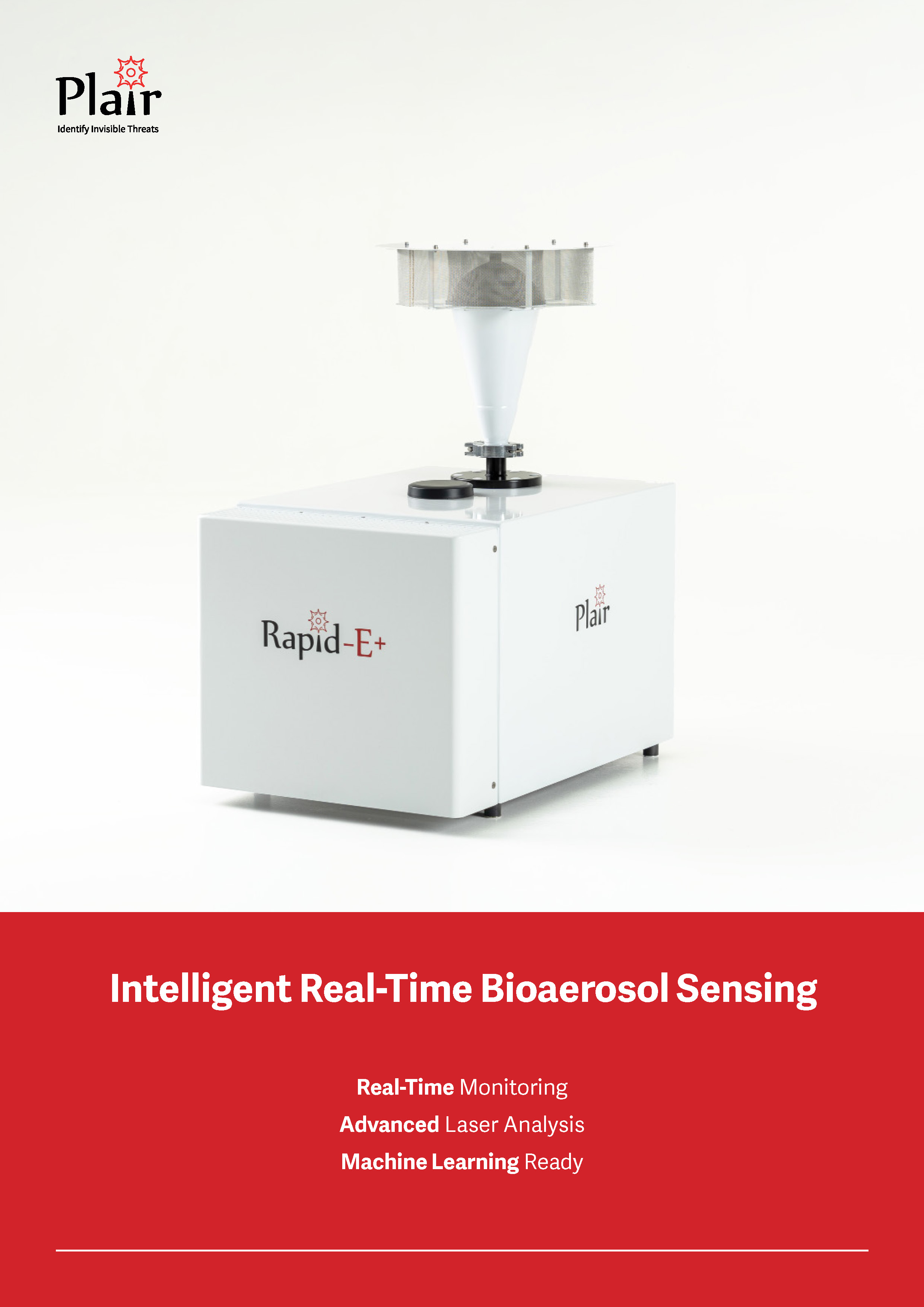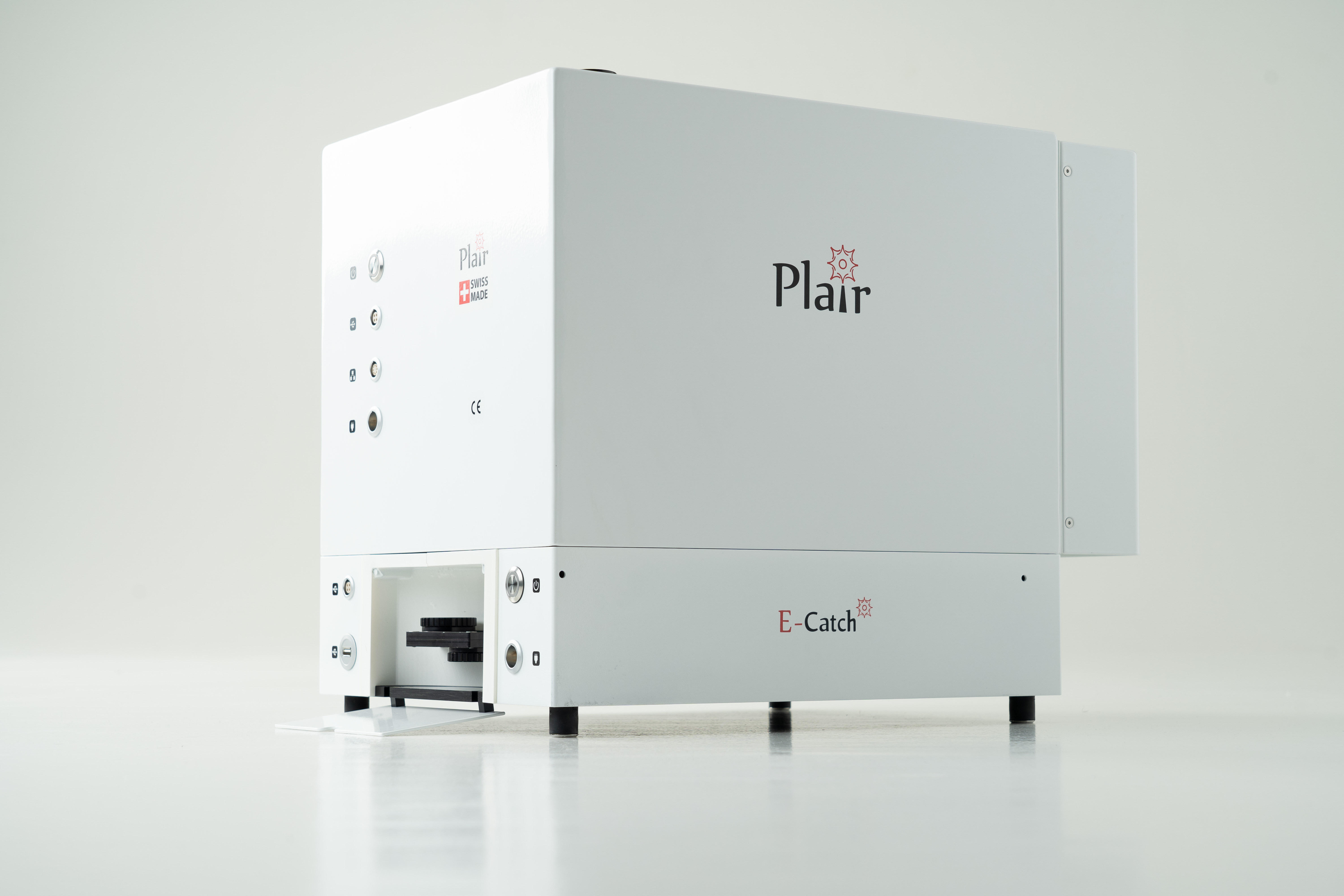
Diseñado para uso en interiores y exteriores
Accesorio disponible: altavoz para exteriores
1. Branko Šikoparija, Predrag Matavulj, Gordan Mimić, Matt Smith, Łukasz Grewling, Zorica Podraščanin, Real-time automatic detection of starch particles in ambient air, Agricultural and Forest Meteorology, Volume 323, 2022, 109034, ISSN 0168-1923.
2. M. Smith, P. Matavulj, G. Mimić, et al.: Why should we care about high temporal resolution monitoring of bioaerosols in ambient air?, Science of the Total Environment (2021).
3. Forde,E et al.: Intercomparison of Multiple UV-LIF Spectrometers Using the Aerosol Challenge Simulator Aerobiologia, 2021.
4. Mimić, G,. et al.: Analysis of airborne pollen time series originating from Hirst-type volumetric samplers—comparison between mobile sampling head oriented toward wind direction and fixed sampling head with two-layered inlet Aerobiologia (Vol. 37, Issue 2, pp. 321–331), 2021.
5. Tumonn, F, et al.: A first evaluation of multiple automatic pollen monitors run in parallel (Vol. 197, p. 111109). Elsevier BV., 2021.
6. Suanno, C, et al.: Monitoring techniques for pollen allergy risk assessment (Vol. 197, p. 111109). Elsevier BV., 2021.
7. Swanson, B. E. et al.: Pollen clustering strategies using a newly developed single-particle fluorescence spectrometer Aerosol Science and Technology (Vol. 54, Issue 4, pp. 426–445),Informa UK Limited, 2020.
8. Kabir, E. et al.: Recent advances in monitoring, sampling, and sensing techniques for bioaerosols in the atmosphere ACS sensors, 5(5), 1254-1267, 2020.
9. Clot, B., et al.: The EUMETNET AutoPollen programme: establishing a prototype automatic pollen monitoring network in Europe Aerobiologia (2020): 1263-1274.
10. Maya-Manzano, J. M., et al.: Recent developments in monitoring and modelling airborne pollen, a review Grana (Vol. 60, Issue 1, pp. 1–19), 2020.
11. Branko Šikoparija: Desert dust has a notable impact on aerobiological measurements in Europe Aeolian Research, Volume 47, December 2020.
12. Danijela Tešendić et al.: RealForAll: real-time system for automatic detection of airborne pollen Enterprise Information Systems, 2020.
13. Sofiev, M. On possibilities of assimilation of near-real-time pollen data by atmospheric composition models Aerobiologia (Vol. 35, Issue 3, pp. 523–531), 2019.
14. Perspectives for nationwide pollen monitoring in Germany Perspektiven für ein bundesweites Pollenmonitoring in Deutschland. Bundesgesundheitsblatt - Gesundheitsforschung - Gesundheitsschutz (Vol. 62, Issue 5, pp. 652–661). Springer Science and Business Media LLC., 2019.
15. Huffman, J, et al.: Real-time sensing of bioaerosols: Review and current perspectives Aerosol Science and Technology (Vol. 54, Issue 5, pp. 465–495), 2019.
16. Fernández, Francisco Moya: Sistemas automáticos para la detección y análisis de bioaerosoles Revista de Salud Ambiental 19 (2019): 130-132.
17. Kawashima, S. et al.: Automated pollen monitoring system using laser optics for observing seasonal changes in the concentration of total airborne pollen Aerobiologia volume 33, pages 351–362(2017).
18. Ingrida Sauliene et al.: Automatic pollen recognition with the Rapid-E particle counter:the first-level procedure, experience and next steps Atmos. Meas. Tech., 12, 3435–3452, 2019.
19. Oteros, Jose, et al.: Building an automatic pollen monitoring network (ePIN): Selection of optimal sites by clustering pollen stations Science of the total environment 688 (2019): 1263-1274.
20. Buters, J, et al.: Allergene pollen in Nederland
21. Buters, J, et al.: Pollen and spore monitoring in the world Clinical and Translational Allergy (Vol. 8, Issue 1), 2018.
22. Kawashima, S. et al.: Automated pollen monitoring system using laser optics for observing seasonal changes in the concentration of total airborne pollen Aerobiologia volume 33, pages 351–362(2017).
23. Sindt, C. et al.: Alternative method for the measure of the biological particles in the air: RAPID-E example EAACI 2018.
24. Chappuis, C. et al.: Automatic pollen monitoring: first insights from hourly data Aerobiologia 36, 159–170 (2020)
25. Crouzy, B. et al.: All-optical automatic pollen identification: Towards an operational system Atmospheric Environment, Volume 140, September 2016, Pages 202–212.
Referencias
Descubra los artículos que mencionan la tecnología Rapid.